Every Side Hustle I've Tried (Real Results)
I've tried more side hustles than I can count, and none of them made me rich. A few made real money. A couple made literally nothing. Here's all of it.
Quick context: I work a full-time W-2 job. I have two freelance contracts. I have two kids, two dogs, two cats, and a husband who works full-time from home. Every side hustle I've ever pursued happened in the margins of an already full life. That matters because the "how much time does this take" question is the one not enough people talk about.
I'm going to walk through each one, what it actually made, and whether I'd do it again.
Side-hustles that actually worked
 ### Freelance; operations & consulting
This is the one that pays me well, and it took the longest to build.
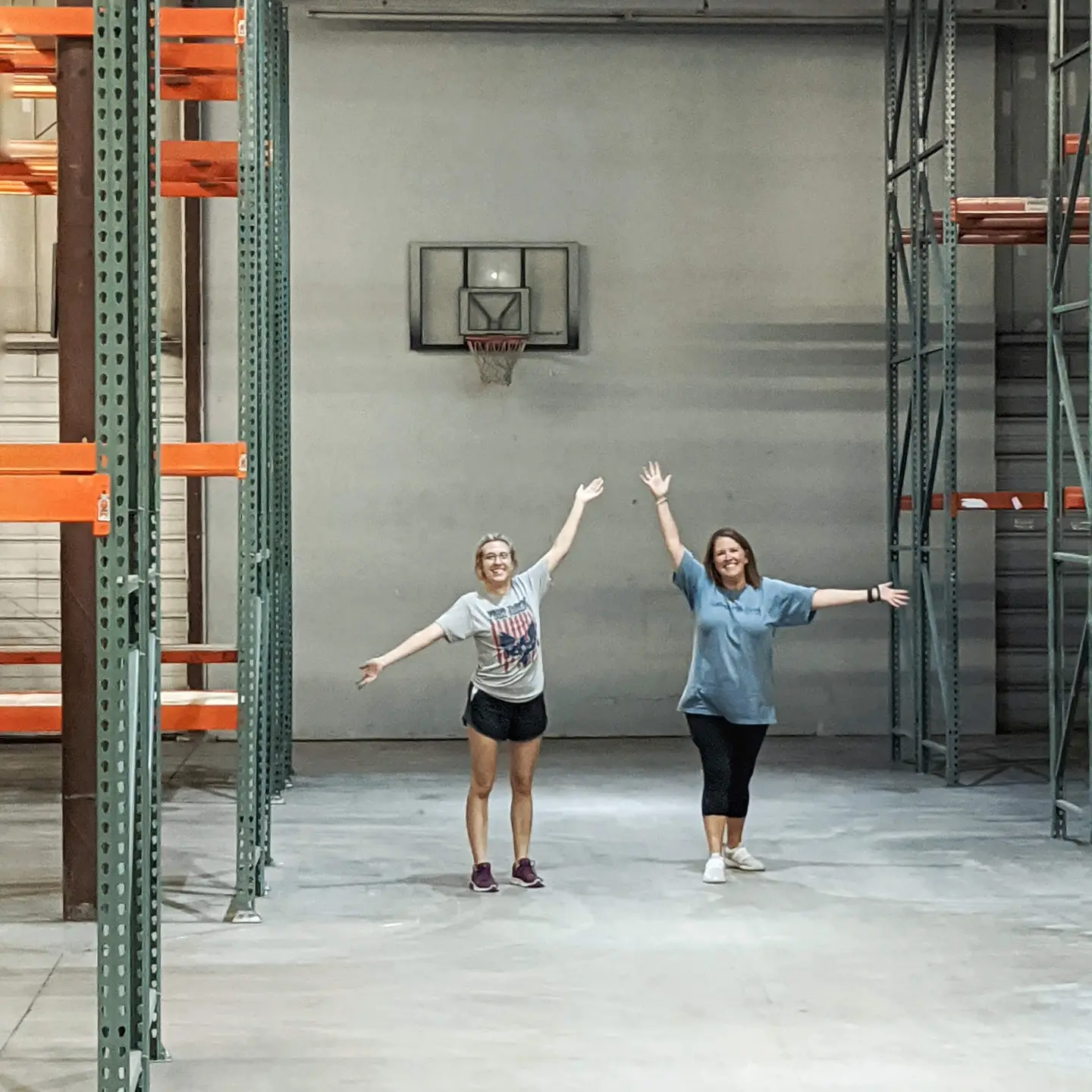
I worked at a small fulfillment company for almost a decade as their operations manager. When I eventually left, they brought me back as a freelance consultant. I now bill $30/hour and work anywhere from 2 to 30 hours a month, depending on what they need. Right now, I'm building them a warehouse management system.
Separately, I picked up an operations contract with a small product company. That started through a staffing agency and they eventually purchased my contract directly. That one runs about 45 hours a month at $25/hour.
Combined freelance income: roughly $1,000–$2,000 a month, depending on hours.
The honest truth about freelance work is that it's the most reliable side income I've found, but it came from skills I built over years at a regular job. I didn't take a course or watch a YouTube video about freelancing. I just got good at something, left, and the company still needed me.
Time investment: 55–75 hours/month combined.
Would I do it again: Yes, it's the most dollar-productive thing I do outside my W-2, and I adore the people I work with
 ### Notion templates
This one caught me off guard. I started making Notion templates mostly for myself, then published a few on Gumroad and the Notion Marketplace.
The numbers across all platforms:
Gumroad: 7,564 views, 2,074 transactions, Almost all of these were free downloads. Total revenue to date: $582.80.
Notion Marketplace: 14,400 views, 7,598 downloads. Nearly all free. Revenue: $127+.
Lemon Squeezy: 246 downloads, $59.20 all-time - this is my newest platform and the one used on the shop page currently.
The standout product is Bible Study OS. It's a Notion template for organizing Bible study notes, and it has 11,300 views and 7,280 downloads. People love it. The problem is I gave it away for free, so it generated about $120 in total revenue despite massive demand.
That's actually the most interesting data point here. 7,280 people downloaded a product that clearly solves a problem for them, and I charged almost nothing. The demand is proven. The monetization wasn't. That's my next project to fix.
Time investment: Maybe 20–30 hours total to build all templates. Ongoing maintenance is almost nothing.
Would I do it again: Yes, but I'd research more before creating the products. I wanted to give away my Bible study template for free, but knowing how successful that was, I could have easily made more content around that and charged for it had I done the work.
YouTube
I have about 8,000 subscribers. I haven't posted new content since early 2025. The channel covers productivity, Notion, and side income topics.
Here's what most people get wrong about YouTube income: AdSense is not where the money is unless you're getting hundreds of thousands of views. My AdSense revenue was never significant - in fact, if you look at from when I started my channel in 2014, I've actually averaged $41 per month from Adsense.
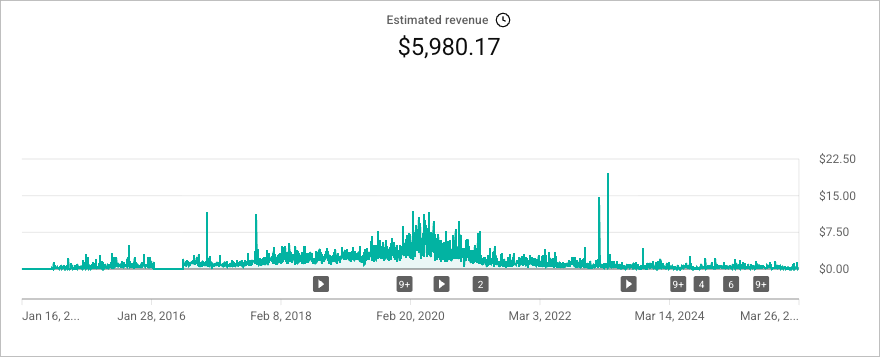 The real money came from affiliate links. I had a Sunsama affiliate deal that was my best-performing partnership. When someone signed up through my link, I got a commission. That worked because my videos were tutorials where people could see the product in action and then go try it. The content was basically a long-form demo, and the affiliate link was the natural next step. I had a few software affiliates that performed really well and some that I even partnered with over the year. If you look at all of my affiliate income over 3 years, it was around $18,000.
Time investment: Big. Each video took 2–10 hours to complete, including scripting, filming, editing, and uploading. For the money it generated, the hourly rate was not great.
Would I do it again: Yes, but only because YouTube content compounds. Videos from 2023 still get views. I'm planning to restart the channel, and this time I'll be more intentional about what I promote and how.
Medium
Medium was my first real taste of low-effort content income, and it taught me everything about how quickly passive income can disappear.
I started writing on Medium in mid-2023, and it took until October 2024 to make any income but by December 2024 I hit was my peak: $214 in a single month. That felt like a breakthrough, but it didn't last. I got lucky with a post going a little bit viral, and that ended up being the most I ever made.
But honestly, the effort was minimal. Each post took me 30 minutes to an hour to write, and I was only publishing 3–4 times a month. That's maybe 2 hours of work for ~$50 per month, plus, I was making affiliate income from each of the blog posts, ranging anywhere from $100 to $500 per month.
By early 2025, I'd stopped writing there entirely. Current monthly income: about $5 in residual earnings from old articles. I let a genuinely easy income stream die because I didn't protect 2 hours a month. That's the part that stings.
Total Medium earnings: $900.49 all-time
Time investment: I was writing 3–4 articles a month during the peak. Probably 2–4 hours a week.
Would I do it again: 100% yes. I genuinely like the Medium community, and I still have a following of about 1,000 people. I do know not to expect a ton of money from the reward program itself, but it gets me in front of new people, and it's low effort since I'm posting the content here anyway.
UserTesting (Surveys)
I've had a UserTesting account since 2022. The concept is simple: companies pay you to record yourself navigating their websites and giving honest feedback. Each test pays around $10 and takes about 15-20 minutes to complete. There are also short surveys on the platform that pay out $1 to $2. Every once in a while, you can qualify for a live call with an agent, which is anywhere between 30 and 60 minutes, and these pay really well. I have been paid up to $200 for these tests.
Total earnings: $674 from 58 tests. That averages out to about $11.60 per test, which isn't bad for something I do on my couch. August 2025 was my best month, with over $290, just from doing a test every few days.
This is one of those side hustles that won't change your life, but it's real money for low effort. If I want $20-$30 in a given month for coffee money, I can make that happen in a couple of sessions. If I actually committed to it consistently, a couple of hundred a month is realistic.
The only catch is that you need a microphone and sometimes a camera, so it has to be quiet. That rules out most of my daytime hours. But after my kids go to bed, it's a solid option for filling 15-minute gaps.
Time investment: 15-20 minutes per test, totally on your own schedule.
Would I do it again: Already am. This one stays in the rotation.
The ones that didn't work (or weren't worth it)
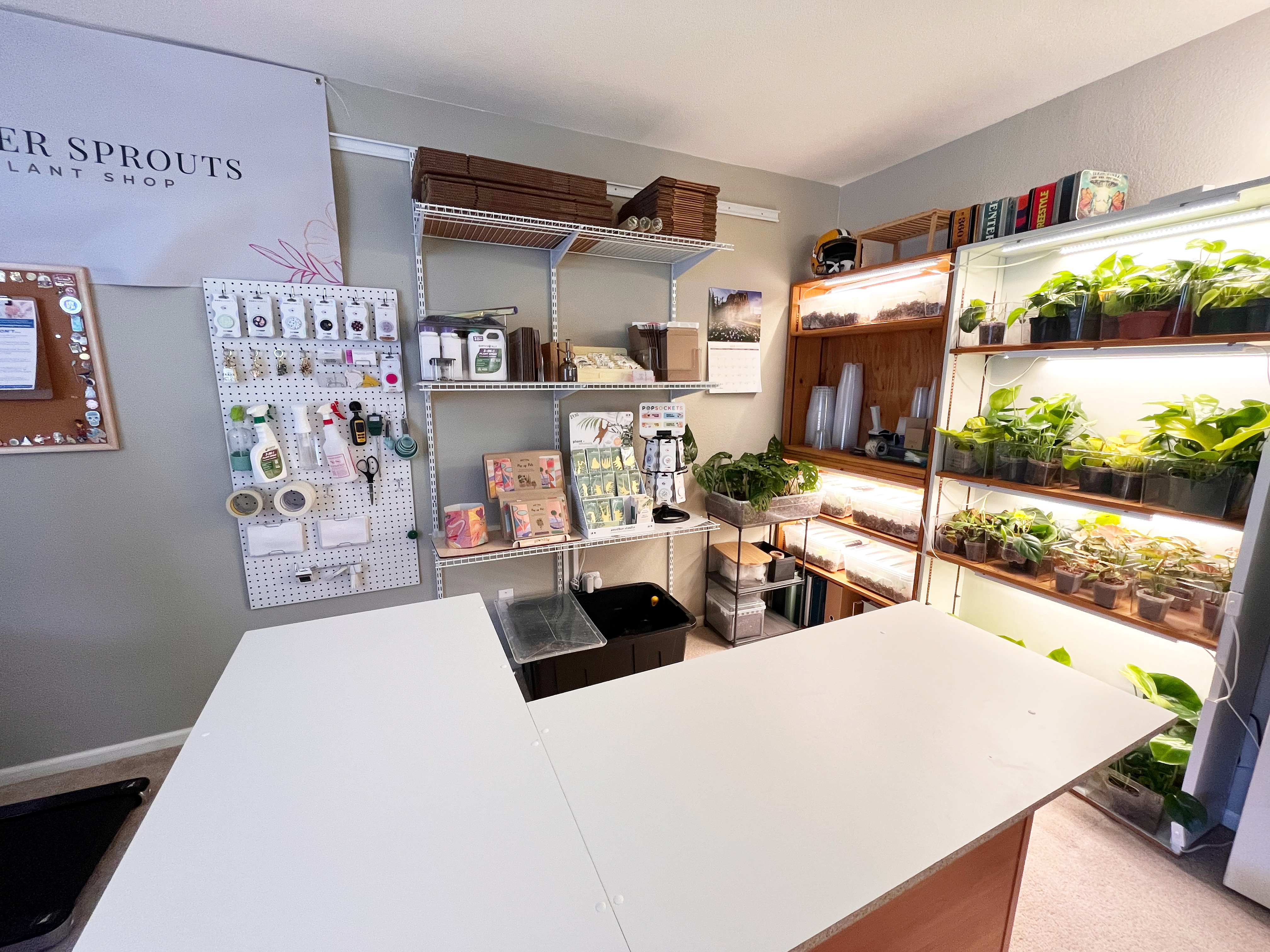 Sister Sprouts (houseplant shop)
This was the first business I started after leaving the operations job I'd worked at for 10 years. We'd moved further away, and working remotely with a new baby made it hard to keep going, so I decided to start something of my own. I opened an online houseplant shop and eventually started doing farmers' markets with my sister-in-law.
I actually loved this business. There's something satisfying about selling a real, physical product to someone who's excited about it. But the margins were terrible. Live plants require constant care, inventory loss is high, and the initial investment in product, a website, and farmers' market supplies adds up fast. After about a year, I'd made roughly $1,000 in profit. For a hobby, that's fine. For a family that needs income, it wasn't close to enough.
I closed it. I do miss it sometimes. If I ever go back to e-commerce, it would have to be with something I can create myself, not something that dies on a shelf.
Stationery shop
A few years later, I tried again with an online stationery shop. Same idea, different product, less money to invest. Purchasing inventory is the most expensive part of e-commerce when you're not making your own product, and the shop grew so slowly that the time and effort no longer made sense. I quit.
The lesson from both of these is the same: physical product businesses need either real capital or a product you make yourself. I had neither.
Instacart
I signed up thinking I'd do grocery deliveries on evenings and weekends. Easy money, flexible schedule, all the things they advertise. After three weeks of checking the app every chance I got, I never actually snagged an order. My area is saturated with drivers, and I wasn't willing to drive around waiting for something to pop up. I wanted it to be convenient, and it just wasn't.
Amazon Flex
I applied, got approved, and went through the training. Never took a single shift. The Amazon facility is about 30 minutes from my house, and I couldn't justify the drive for the pay. In hindsight, anything that requires blocks of driving time doesn't work for my life. I don't have hours at a time to give. I have minutes here and there.
UGC (user-generated content)
I built a full portfolio and signed up for apps like Kale, but I never actually pitched to brands. I was hoping they'd find me, which isn't how it works. I did land a couple of partnerships and affiliate deals for my YouTube channel through the process, so it wasn't a total waste. If I try UGC again, I'd take a completely different approach. This one's actually still on my list to attempt, so more on that later.
I tried posting Amazon affiliate links directly to Pinterest and got a bunch of them banned. Turns out you're not technically supposed to do that. The content is supposed to be original, not just affiliate links. I didn't love the time it took to create graphics, so I stopped putting effort into it. Some of my old blog posts still get traffic from Pinterest, but it's not meaningful income.
This is one I want to revisit. I know people make real money from Pinterest. I just haven't figured out how yet.
 ## What I'd tell someone starting now
I'm not going to wrap this up with "anyone can do it" because that's not what I learned. What I learned is that the side hustles that worked for me all had something in common: they used skills I already had.
Freelance consulting works because I spent a decade learning operations. Notion templates work because I already use Notion every day. YouTube works when I'm consistent because I know the topics from my real life, not from research.
The stuff that didn't work was usually stuff where I was starting from zero with no advantage. That's not a moral failure. It's just a bad strategy when you have limited time.
If you're a working parent with a full-time job and you want to build a side income, start with what you already know. Look at the hobbies that you've enjoyed in the past. Look back at your middle school years. What did you like doing then? How can you monetize that today? It's the only pattern I've seen hold up over six years of trying things.